Alternatives to a care home: what the options are
A care home is one answer, not the only one. The other ways an older person can get help, from a grab rail to a carer living in, and who each one suits.

By the AnnMarie’s Care team
Published —5 min read

At a glance. A care home is one option among several. Many people manage with changes to the house, carers who visit, a carer who lives in, or a move to housing with support. Start with a free needs assessment from the council, and choose on what the person needs and wants. This guide is written for England.
The words "care home" tend to arrive suddenly. There is a fall, a hospital stay or a bad winter, and a doctor, a neighbour or a worried brother says them out loud. It can sound as if the choice is between carrying on as things are and moving out.
It is not. There is a good deal of ground in between, and most families use some of it first.
Start with what is actually difficult
Before comparing options, write down what has become hard. The stairs. Getting in and out of the bath. Cooking. Tablets. Being alone at night. Loneliness. The answer to "she cannot manage the bath" is very different from the answer to "he should not be on his own".
Anyone who appears to need care can ask their council for a needs assessment. It is free, and you are entitled to one whatever your savings. It is also a good way to hear about local services you would not find on your own.
Changing the house
Sometimes the problem is the building and not the person: a second stair rail, a grab rail by the bath, a ramp at the front step, better lighting on the landing.
Ask the council for a home assessment, which is free. In England the council should pay for each adaptation that costs less than £1,000. For bigger work, such as a stairlift or a level-access shower, a Disabled Facilities Grant can provide up to £30,000, depending on household income and savings.
Alarms and technology
A personal alarm, worn on the wrist or round the neck, calls for help after a fall. Monitored systems, often called telecare, can alert a call centre or a relative, and some councils offer a basic service.
An alarm does not help anyone wash or cook. It does answer the fear of lying on the floor with nobody knowing, and that fear is often what is driving the conversation.
Carers who visit
Home care, also called domiciliary care, means a paid carer coming to the house. The NHS describes it as anything from an hour a week to several hours a day, or at night. It suits someone who needs help at particular points: getting up, a meal, tablets, bed.
Its limit is the time between visits. We have written about where that line falls in live-in care or home care visits.
A carer who lives in
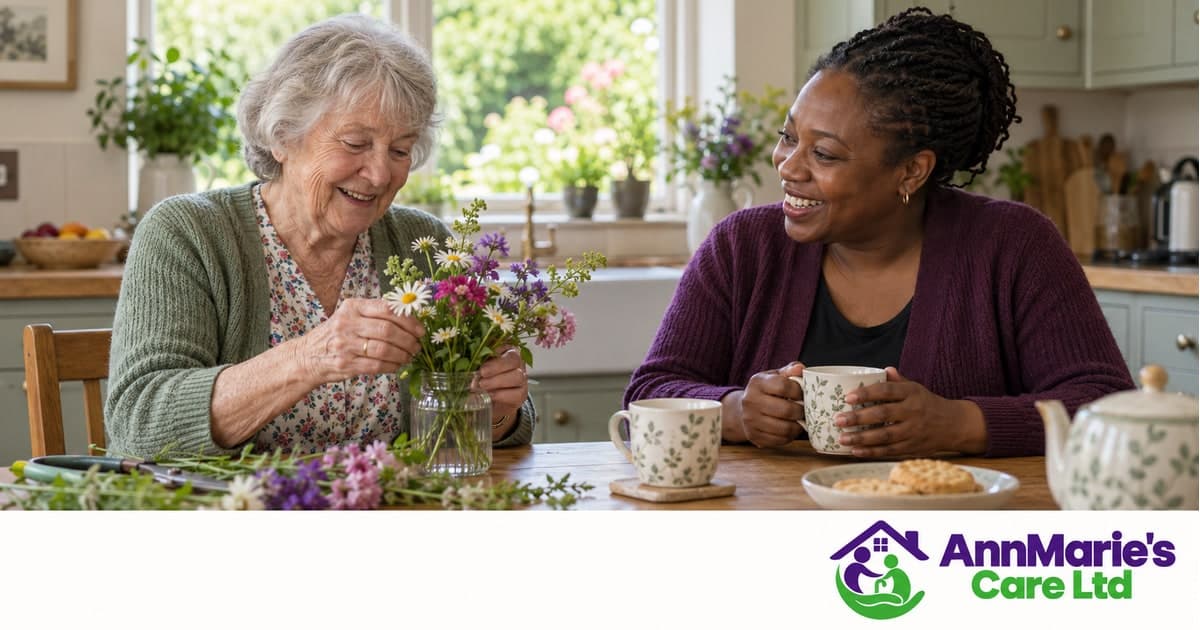
Live-in care puts one carer in the spare room. They are there through the day and in the house at night, so the person keeps their own home, routine, garden and pets. It needs a bedroom for the carer, and it is usually arranged when someone should not be alone for long, or when visits have stopped being enough. For a couple it can mean staying together.
This is the care we provide, so weigh our view accordingly. Our comparison of live-in care and a care home sets out both sides.
Day centres and short breaks
A day centre offers company, a meal and something to do for a few hours, and gives a family carer the day back. A short stay in a care home, or a carer living in for a fortnight, can cover a holiday or an operation.
Neither is a long-term plan on its own, but both can make an arrangement at home last a good deal longer.
Moving somewhere easier to manage
Sheltered housing, also called retirement housing, is a flat or bungalow you buy or rent, with a scheme manager and a 24-hour emergency alarm. Meals and personal care are not usually included, so carers are arranged separately, as they would be at home.
Extra-care housing, sometimes called assisted living, is the same idea with more care available on site. Both mean a move, but to a home of your own and not to a room in someone else's.
Moving in with family
It works well for some families and badly for others, and it is hard to undo. Be honest about space, stairs, work, and who will be at home in the day.
If you become the main carer, you can ask the council for a carer's assessment, which is free, and you may be able to claim Carer's Allowance.
When a care home is the right answer
We say this to families regularly. A good care home is a good choice when nursing needs call for a nursing home's staff and equipment, when the house cannot be made safe, when someone is lonely at home and would come alive in company, or when the family can no longer keep an arrangement at home going.
Looking at the alternatives first is not a way of avoiding a care home. It is how you know you chose one.
Most families combine them
A rail and an alarm now. Visits in the mornings later. Live-in care, or a move, later still. You do not have to settle the next ten years this week. Deal with what is difficult now, and agree when you will look at it again.
Useful sources
NHS: getting a care needs assessment; NHS: home adaptations; GOV.UK: Disabled Facilities Grants; NHS: personal alarms and telecare; NHS: help at home from a paid carer; Age UK: sheltered housing; NHS: carer's assessments.